


2026 Fellows
VSA International VET Practitioner Fellows
%20(1).png)

Jye Marshall
Bridging the artificial divide between VE (skills) and HE (Knowledge) within Design Education for equitable student engagement.
Jye Marshall’s fellowship examines the imbalance within the Australian Qualifications Framework (AQF), where knowledge has been prioritised over skills and vocational education positioned below higher education. In the context of the Fourth Industrial Revolution, the fellowship recognises the growing importance of advanced design skills to Australia’s sovereign capability. It investigates how vocational education can be better scaffolded within dual-sector universities to create equitable pathways for students from diverse backgrounds. Engaging with leading international design institutes, the fellowship aims to develop models that harmonise vocational and higher education, ensuring skills-based learners lead in design innovation and excellence.

Laura Fitt
Building a Sustainable Micro‑Credential Ecosystem for Victoria’s Clean‑Economy Workforce
Laura Fitt proposes to investigate international models of industry‑funded, subscription‑based upskilling that enable workers to gain nationally recognised, stackable micro‑credentials while remaining employed. Her Fellowship will explore systems such as Germany’s Chambers of Commerce (IHK) and Singapore’s SkillsFuture, focusing on how they coordinate industry, government and training providers to keep qualifications current in rapidly evolving clean‑economy trades. Laura aims to translate these insights into a Victorian context, where Skills First funding delivered across 12 autonomous TAFEs creates a highly diverse landscape of micro‑credential approaches. Her goal is to design a viable TAFE‑consortia model that delivers responsive, industry‑aligned micro‑credentials and establishes a sustainable revenue stream for public providers, strengthening workforce transition as clean technologies accelerate.

Matt Tisdale
Fellowship in acquiring skills in Off-Shore wind & Subsea cabling
This Fellowship will focus on strengthening Australia’s vocational education and training response to the emerging offshore wind industry, with particular emphasis on subsea cable jointing and turbine-related skills. As offshore wind becomes a critical component of Australia’s renewable energy transition, there is an urgent need to develop specialised skills that are currently limited or emerging within the local workforce. Through engagement with leading international training providers, research centres and offshore wind operators, the Fellowship will examine advanced training models, safety frameworks and approaches to industry integration in mature offshore wind markets. The research will inform the design of high-quality, industry-aligned training programs within the Victorian TAFE sector, supporting workforce transition from traditional energy industries into clean energy roles. By strengthening curriculum design, industry partnerships and educator capability, the Fellowship will contribute to building national workforce capacity and supporting Australia’s progress toward net zero targets.

Leeanne O'Meara
Fellowship in Investigating Early Childhood Scandinavian nature‑based and social‑pedagogical approaches to strengthen Australian practice.
This Fellowship aims to strengthen Australian early childhood education by investigating internationally recognised nature based and social pedagogical approaches—particularly Scandinavian models—and translating them into practical, context specific strategies for the Victorian VET and ECEC sectors. Australian research shows clear developmental benefits of nature rich, play based learning, yet current teacher education and practice remain inconsistent, risk averse, and poorly aligned with this evidence. By studying high quality Danish outdoor programs and their relational, child led pedagogies, the Fellowship will address these gaps and develop best practice guidance, educator tools, and curriculum enhancements. The purpose is to build early childhood teacher/educator capability, reframe risk as a learning opportunity, and embed culturally responsive, nature centred practices that support children’s agency, wellbeing, and holistic development. Through professional learning, open access resources, and strong local partnerships, the Fellowship seeks to influence training quality, enrich program design, and contribute to long term pedagogical innovation across the VET and early childhood sectors.

Wayne Ketchen
Growing the Clean Economy Workforce: Boosting Engagement in FutureReady Agriculture
This Fellowship, Growing the Clean Economy Workforce: Boosting Engagement in Future‑Ready Agriculture, seeks to strengthen how vocational education engages and supports learners in agriculture and horticulture at a time of significant environmental and economic transition. These sectors are central to Victoria’s clean, resilient and circular economy, yet continue to face workforce shortages, ageing demographics and low learner completion rates. Through an international study program, the Fellowship will explore proven approaches that place learners at the centre of climate‑aware, technology‑enabled and regenerative agricultural training. It will examine applied learning environments, industry‑embedded education, digital capability, wellbeing‑informed pedagogy and place‑based models that build motivation, relevance and persistence. The insights gained will inform practical improvements to curriculum design, learner engagement strategies and workforce development within the Victorian VET context. The Fellowship will also consider how elements of these approaches could be adapted, where appropriate, to support engagement and retention challenges in other VET industry sectors.

Seun Oyekola
Developing Circular Construction Capability through International Best Practice in Tunnel Spoil Reuse
Seun Oyekola is undertaking a Fellowship focused on circular construction and the beneficial reuse of tunnel spoil, the excavated soil and rock generated from major tunnelling projects. The Fellowship aims to turn tunnel spoil from a waste stream into a reusable resource by building the workforce capability needed to support circular construction. The Fellowship will examine international best practice in the United Kingdom and Europe, including regulatory frameworks, material testing, digital tracking systems, risk management and workforce training that enable excavated materials to be safely repurposed for construction, land remediation and other productive uses. Through targeted engagement with industry leaders, training providers and research organisations, the Fellowship will identify practical approaches for Australia and inform microcredentials, curriculum resources and educator capability through Holmesglen Institute and the Victorian Tunnelling Centre.

Peter Komsta
From the Sidelines to the Classroom: Building a World-Class Model for Industry-Embedded Sport Business Education in Victorian VET
Peter Komsta, Director of Business and Enterprise at RMIT's College of Vocational Education, is investigating international best practice in industry-embedded sport business education. Australia's sport industry is worth A$40 billion annually, employs 150,000+ people and encompasses a rapidly growing ecosystem of clubs, federations, media, commercial operations and a sportstech sector where Victoria accounts for nearly half of national employment, yet no systematic, evidence-based framework exists to guide how VET providers build and scale genuine industry-education partnerships. This Fellowship will visit leading institutions in the United Kingdom, Spain and Singapore (including UCFB, Loughborough University, the Education and Training Foundation, the Johan-Cruyff-Institute and the Singapore Sports Hub), as well as cricket-specific education organisations including the MCC Foundation at Lord's, the University of Brighton Cricket Academy and potentially the R66T Academy. Findings will inform a publicly available Industry-Embedded VET Program Design Framework, an educator professional learning program with VDC, and further development of RMIT's Global Sport Business Hub.

Jane McLennan
Future Ready Approaches to Student Success: Global Insights to Improve Outcomes for Priority Learners in Vocational Education
This Fellowship will investigate leading international models that successfully engage at risk learners through wrap around support, inclusive pedagogy and sustainable use of assistive and learning technologies. By examining high performing institutions with strong retention and completion outcomes, the Fellowship will identify scalable approaches that strengthen belonging, early intervention and learner independence across the student lifecycle. Insights will be translated into practical frameworks, professional learning resources and pilot initiatives will be implemented. Broader application across Victorian TAFEs will be considered and the Fellowship will be designed to build sector capability, improve participation and completion for priority cohorts, and ensure VET remains responsive, equitable and future focused.

Vanessa DeMonte
Fellowship in Digital Innovation for Dental Technology and Prosthetics
This Fellowship for Dental Technology and Prosthetics Education will support Vanessa DeMonte, Program Coordinator of the Diploma of Dental Technology and Advanced Diploma of Dental Prosthetics at RMIT University, to investigate how leading European providers prepare graduates for modern dental practice. Visiting key institutions in Europe, Vanessa will examine how CAD/CAM, 3D printing and other digital workflows are taught alongside traditional laboratory skills, and how strong links with industry and clinical settings are maintained. Insights gathered through observation, shadowing and consultation will be translated into updated curriculum, assessments and work‑integrated learning models. The Fellowship outcomes will include enhanced student engagement, improved digital capability and work readiness of graduates, and sector wide professional development opportunities for VET educators in Dental Technology and Dental Prosthetics.

Luisa Drent
Shifting the Front End: Enabling MMC through Design-Led Capability in Australia’s Construction Workforce
Luisa Drent is a registered architect, educator and curriculum leader with extensive experience across architectural practice, vocational education and workforce capability development. She is currently working within the Future of Housing Construction Centre of Excellence, where her focus is on emerging construction skills, Modern Methods of Construction, Design for Manufacture and Assembly, and applied training for industry. Her fellowship explores how Australia can better equip architects, designers, building professionals and decision-makers with the design-led, digital and manufacturing capabilities needed to support housing innovation and construction sector transformation.

John Tugliach
Embedding Electric Vehicle Skills, Safety and Knowledge in Automotive Apprentice Training: An International Study of Best Practice
This research project aims to collect, synthesise and practically embed international best practice in Electric Vehicle (EV) training within automotive apprenticeship frameworks, with the goal of strengthening and supporting Australia’s adoption of Electric Vehicles. It will investigate how leading international jurisdictions embed EV knowledge, practical skills and safety competence within automotive apprenticeship systems. Focusing on apprenticeship education in countries such as Germany, Norway, China and South Korea, the research intends to examine how EV capability is integrated as a core requirement of the trade, rather than an add-on qualification, supported by clear alignment between training, high‑voltage safety and workplace responsibility. The study responds to increasing policy and industry concern that current Victorian and national approaches risk falling behind the pace of technological change and the industry-wide pressures of a rapid adoption of electric vehicles by Australian consumers. By identifying transferable international best practices, the project aims to inform future curriculum development, create clear pathways, and support a more consistent, industry‑endorsed approach to EV training. The outcomes are intended to contribute to strengthening the role of the automotive trade in supporting growing EV adoption and achieving Australia’s broader net‑zero ambitions.
%20(1).png)
George Alexander Foundation Fellows


Bryony Cavallaro
Bits, Discs and Beyond: Preserving Obsolete Digital Carriers
Bryony’s Fellowship addresses the urgent challenge of preserving born-digital cultural heritage stored on obsolete carriers such as floppy disks and CD-ROMs. As these media physically degrade and the hardware and software required to access them disappear, significant portions of recent history are at risk of permanent loss. The Fellowship will investigate current digital preservation practices, examining the challenges, workflows, and tools used by leading institutions to stabilise, process, and provide access to complex digital artefacts while maintaining their context and authenticity. Through hands-on engagement with established preservation programs in Europe, the Fellowship will strengthen technical capability in areas including carrier handling, data recovery, and emulation. It will also build specialised knowledge and professional relationships within the digital preservation community, enabling the transfer of tested approaches to Australian institutions and improving long-term care of digital cultural heritage.

Genevieve Elliott
The Craft of French Savoir-Faire: Investigating Material, Process and Fashion Practice
Genevieve is a fashion designer and material-led researcher whose Fellowship focuses on preserving French savoir-faire within contemporary Australian design. Genevieve’s Fellowship will investigate specialist artisan techniques including embroidery, textile floristry, featherwork and textile manipulation, with a focus on advancing three-dimensional surface design. Through collaboration with leading ateliers and craftspeople in Paris, her research will centre on hands-on technical training and mentorship within globally significant maisons. Travelling to France, Genevieve will engage with institutions, archives and craftspeople, gaining insight into the transmission and preservation of rare craft knowledge. The Fellowship will strengthen technical expertise, establish international connections, and support the development of a digital archive and education program, ensuring these skills can be shared, sustained and reimagined within Australia’s creative sector.


Gracie O'Malley-Welby
Rebuilding with Earth: Scaling Contemporary Compressed Earth Block Construction in Australia
Gracie O’Malley-Welby is an architectural graduate and design researcher exploring how low-carbon building materials can be made and used more widely in Australia. Her Fellowship focuses on compressed earth blocks, a grounded construction method made from local soils and mineral by-products, with minimal cement and no firing. While widely used overseas, they remain uncommon in Australia due to limited production and design knowledge. Earth blocks also bring a distinct material quality: solid, textured and closely tied to the landscapes they come from. Through the Fellowship, Gracie will visit leading European practitioners to learn how these materials are produced, tested and designed at a larger scale. She will bring this knowledge back into her work at Main&Frank, helping to develop practical pathways for using earth-based materials in contemporary Australian architecture

Rhys Jones
Regional Identity in Timber Craft: Connecting Material, Technique and Place
Rhys’ fellowship explores how timber craft practitioners in Europe and the UK are developing supply chain regionalism, material intelligence, and adaptive making strategies to create work that is environmentally sustainable. He will engage with furniture makers, forestry experts, and research bodies to build a comparative study of experimental forming techniques and timber supply networks. Drawing on this research, Rhys will introduce sustainable making strategies into Australian studio practice that connect material, technique, and place. This work aims to diversify the timber sector, reduce dependence on imported materials, and foster regional design language within Australian craft and design.
Mason Family Trust Fellows


Poppy Templeton
Beyond Decoration: Stained Glass As Architecture In Mexico
Poppy Templeton is a Melbourne-based stained glass artist who will undertake applied research in Mexico, investigating architectural stained glass in civic, non-religious contexts. In Mexico, stained glass is not a decorative afterthought but a fundamental tool for shaping and transforming public space. A distinct professional model exists in which traditional leadlighters collaborate directly with architects and stained glass is integrated from the earliest stages of design. Mexico presents a unique opportunity to explore how traditional leadlighting operates beyond its usual ecclesiastical setting. By embedding within established studios, Templeton will access lineage-based techniques in large-scale construction and installation that are currently unavailable in Australia. This research is driven by the need to reposition stained glass as a viable architectural material within Australian practice.

Brenda Page
The Marked Surface - Reviving Print and Enamel Traditions for Contemporary Glass Image Making
Brenda Page is a glass artist and educator whose Mason Family Trust Fellowship will take her to the United Kingdom to research the intersection of traditional ceramic and glass paints with copper plate etching, a printmaking technique historically used to transfer imagery onto ceramics before the advent of screen and digital printing. Through hands-on mentorship with leading UK practitioners, Brenda will deepen her knowledge of traditional vitreous enamels and glass paints while expanding her printmaking skills to encompass advanced screen printing, copper plate etching, transfer printing, and decal production. This cross-disciplinary inquiry will enrich both her studio practice and her work as an educator, equipping her to bring a sophisticated blend of historical technique and contemporary application back to the Australian arts community.
Lady Shirley Gobbo Fellowship

Steven Bellosguardo
Venetian Bronze - Traditional Processes for Contemporary Practice
Bellosguardo will undertake a Fellowship in Italy’s Veneto region to develop an integrated sculptural methodology spanning clay modelling, mould-making, and lost-wax bronze casting. Working with historic and contemporary Venetian foundries, he will gain hands-on experience in armature construction, mould systems, wax preparation, casting, and finishing - learning from artisans who continue centuries-old practices. The program follows the traditional Italian production chain from clay to permanent material outcome, offering an end-to-end workflow. As a third-generation stonemason of Italian heritage, Bellosguardo connects intergenerational knowledge with contemporary practice. The Fellowship will expand his capacity to produce durable, large-scale works and be shared through workshops, collaborations, and exhibitions, contributing to the future of material-based sculpture in Australia.
Sir James Gobbo Legacy Italian Australian Foundation Fellows

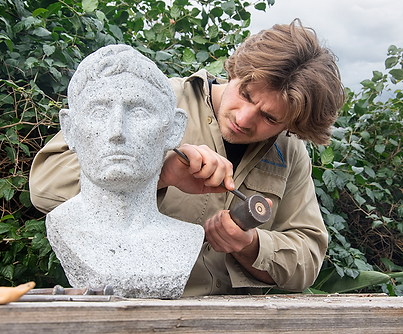
Marcello Zudich
Figurative Sculpture in the Realistic Classical Tradition: Skills in Marble Carving, Bronze Casting and Restoration/Conservation of Heritage Buildings
As Marcello’s apprenticeship in Heritage Stonemasonry draws to a close, he aspires to combine his masonry skills with his deep appreciation for the arts by studying figurative sculpture in the realistic classical tradition at the birthplace of the Renaissance: Florence. Marcello has been accepted by The Florence Academy of Art and will begin a three-year sculpture programme in October 2026. Whilst in Florence Marcello will visit and develop relationships with various marble carving studios, fine art bronze foundries, and building conservation/restoration sites throughout Italy. Upon his return, Marcello will share his newly founded skills in sculpture, stonework, and conservation with Australia’s Stonemasonry industry and art community.

Lucca de Clario
Applying Italian Devotional Ceroplastics to Contemporary Sculpture
As a recipient of the 2026 James Gobbo Fellowship, Lucca de Clario will undertake applied research in ceroplastics in Italy in 2027. Ceroplastics is a centuries-old practice of modelling in wax, used across anatomical, medical and devotional traditions to create effigies and lifelike representations of the human body. Mentored by specialist practitioners and undertaking research in ceroplastic collections, Lucca will develop practical skills in the materials, fabrication processes and technical methods that underpin the tradition. The project will situate these historical techniques within contemporary sculpture, approaching wax as a finished sculptural material.

Alberto Di Troia
Spoken Heritage: Preserving Regional Italian Dialects On Stage and In Performance
Alberto will explore how theatre and performance can help preserve regional Italian dialects through the lens of his own creative practice, developing a multi-dialect, Italy-set play about Italian-Australian identity. He will travel to Naples to undertake classes in Napoletano dialect before conducting field research and interviews in his family's village in Campania. He will then observe acclaimed Italian theatre makers working in regional idioms in Rome. The research will help to develop the presentation of multi-dialect, multi-lingual work in Australia, explore how theatre can protect vulnerable languages and cultural traditions, and serve as a form of living memory for Italian-Australians.