


Incoming Fellows
Read about our Incoming Fellows over the years, and the impact they have made in Australia.
About the Program
Advancing Australian Professional Excellence Through International Knowledge Exchange
The International Specialised Skills Institute (ISS Institute) Incoming Fellowship program facilitates the engagement of distinguished international experts with Australian professional communities. Sponsored by the Victorian Skills Authority, this initiative creates strategic opportunities for knowledge transfer, enabling Australian education, industry, and government leaders to engage directly with global innovators who share evidence-based practices and transformative insights.
Strategic Value for Australian Organisations and Professionals
The Incoming Fellowship Program delivers unprecedented access to global expertise, enabling Australian professionals to engage directly with innovative methodologies, contemporary research, and evidence-based practices from leading international institutions and organisations. Australian organisations gain immediate access to international perspectives on industry challenges, educational innovation, and policy development. These insights enable local institutions to contextualise and adapt global best practices to Australian operational environments, thereby improving outcomes for students, employees, and communities. The program particularly emphasises practical application, ensuring that visiting experts share immediately actionable strategies rather than purely theoretical frameworks. This approach maximises the immediate impact of each fellowship whilst building sustainable, long-term capacity within Australian organisations. Participants gain direct exposure to cutting-edge professional practices and research from leaders in their respective fields. The program creates networking opportunities that extend substantially beyond the two-week engagement period, with fellows frequently maintaining ongoing professional relationships with Australian colleagues. These connections often lead to collaborative projects, research partnerships, sustained knowledge exchange, and opportunities for future international engagement.
For the Broader Community
The program facilitates mutual learning and sharing opportunities, enabling organisations to gain fresh perspectives and inspiration whilst providing fellows with insights into Australian professional contexts. This reciprocal exchange enriches both international and Australian professional practice, creating lasting value for all participants.
Distinguished Fellows
The ISS Institute Fellowship Program has hosted exceptional international experts who have made substantial and lasting contributions to Australian professional practice across multiple domains

2024
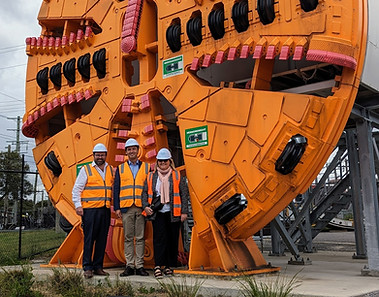
José Ramón & Natalia Gaston

2022
Neil Morris
2023
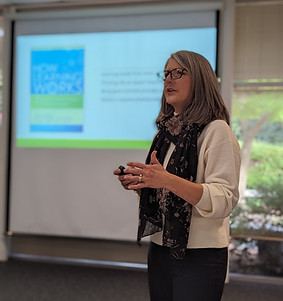
Dr. Kimberley Grant

2021
Margarita Pavlova
2023
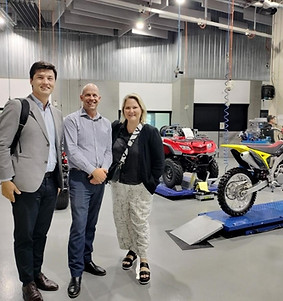
Mergim Jahiu

2019
Kirke Olson
2018 onwards:
Explore more incoming Fellows and their insightful research from 2018 - 2010:
2018 April
José Luis
José Luis Fernández Maure, is an enthusiast for the Vocational Education and Training System and for the opportunities that the Internationalization offers at a professional and personal level. He was coordinator of International projects at a Technical College since 1993. Coordinator of mobility, Erasmus and Leonardo, and TOI projects at the organization IKASLAN (Association of Public Technical Colleges from the Basque Country) from 2004-2008. Advisor of Technical Colleges in the preparation and development of international projects during the same period. Since Sept 2008 facilitator of internationalization at TKNIKA (Institute of Applied Innovation and research for Basque VET system)
2017 April
Trina Hoefling
Trina has been at the forefront in transforming the workplace virtually since developing a remote management training design for a multinational corporation in 1984. She believes that “Technology is the enabler, but People are the key”. Trina is an organisation development and transformational change consultant, graduate school professor and master teacher, strategic facilitator, leadership coach and virtual team engagement expert. She is a virtual management pioneer, co-founder of The Smart Workplace and Virtual Workplace University, and author of Working Virtually: Managing People and Organisations for Virtual Success. Her Fellowship included running a range of workshops for regional and metropolitan TAFEs, presenting at the EdVET conference, where she met with various VET peak bodies and representative, and being a panel member of the ISS Institute's inaugural "Illuminate Series". We have a range of partners that supported Trina's Fellowship including' Chisolm, eWorks VDC and VTA
2017 November
Alan Levine
Alan is recognised for applying new technologies to education. A pioneer on the web in the 1990s and an early proponent of blogs and RSS, Alan shares his ideas and discoveries at CogDogBlog. Among his recent interests are new forms of web storytelling (including 50+ Web 2.0 Ways To Tell a Story, pechaflickr, and the StoryBox), as well as leading and teaching the open digital storytelling class, ds106. He typically consults with higher educational institutions on digital technologies and the affordances of the open web, working with a variety of higher education institutions and organizations such as Virginia Commonwealth University, Universidad del Sagrado Corazón, The Open University, Digital Media Hub, and Mozilla. Additionally, he develops open web-based tools shared openly on Github.
2016 October
Jimmy Pham
In partnership with the VET Development Centre (VDC), Jimmy Pham brought his internationally respected social enterprise expertise from Vietnam. As founder of KOTO (Know One, Teach One), Jimmy shared insights on providing intensive training programs in life skills, English language, and hospitality for marginalised and at-risk youth. His fellowship engaged members across VET, health, youth, and employment sectors, demonstrating innovative approaches to vocational training and social inclusion. These distinguished fellows exemplify the calibre of international expertise the program consistently attracts and the substantive, lasting impact these fellowships have on Australian professional practice across education, urban planning, technology, media, and social enterprise sectors.
2015 November
Nancy White
Undertaking her Fellowship Program in partnership with Chisholm Institute of TAFE, Nancy focused on strategic communication, online community development, facilitation, and learning services for community, non-profit, and business sectors. Her expertise in online communities, communities of practice, distributed teams, e-learning, and virtual workgroups provided valuable insights during the evolution of digital learning environments.
2014 November
Professor Stephen Heppell
Prof. Stephen Heppell engaged by Melbourne Library Service and the ISS Institute, shared his scholarship on technology and creative learning, learning space design, alternative pedagogies, engaging disadvantaged youth, and learning through play. His contributions have significantly influenced Victorian educational practice, particularly in library and community learning environments.
2014 October
Elizabeth Ferdon
From her YouTube, Elizabeth brought extensive digital innovation expertise to Australian media and education sectors. Her insights into technology licensing, revenue sharing models, and digital content creation helped Australian organisations understand and leverage emerging technologies for learning and community engagement.
2014 October
Professor Bill Lucas
Prof. Bill Lucas is an internationally recognised expert in learning, leadership, and human intelligence, who has provided insights into how children and adults learn most effectively. His work on lifelong learning, workplace learning, and family learning has influenced Australian approaches to professional development and educational leadership.
2014 May
Dame Julia Cleverdon DCVO CBE
Recognised by The Times as one of Britain’s 50 most influential women,Dame Julia Cleverdon engaged extensively with Victorian government, education, and business sectors. Her fellowship demonstrated how international expertise can catalyse cross-sector partnerships and collaborative approaches to educational improvement and youth development.
2013 March
Professor Carlo Ratti
Prof Ratti, from MIT, a distinguished Italian architect and engineer who directs the MIT Senseable City Lab, shared insights on how emerging sensors and technologies transform our understanding of urban built environments, from infrastructure systems to waste management, influencing Australian smart city initiatives.
2012 October
Sunit Tandon
As Director General of the Indian Institute of Mass Communications, New Delhi, Sunit Tandon engaged with multiple Australian institutions including the Australia India Institute, Centre for Advanced Journalism at the University of Melbourne, Open Channel Co-operative Ltd, RMIT University’s Media and Communication department, Screen Producers Association of Australia, and Victorian College of the Arts. His program facilitated critical dialogue on democracy, media, and cross-cultural communication.
2012 August
Professor CJ Lim
From The Berkeley, University College London, Prof CJ Lim delivered his program “Imagining the Emergent City” at RMIT University, contributing to contemporary discourse on urban futures and architectural innovation in Australian contexts.
2011 July
Professor Kent Larson
Prof Kent Larson from the Massachusetts Institute of Technology (MIT) Media Lab shared pioneering insights on “The Development of Living Labs” at the Department of Architecture and Melbourne School of Design, University of Melbourne. His fellowship inspired new approaches to urban innovation, participatory design, and community engagement across Australian educational and research institutions.
2010 August
Professor Masao Fukuhara
From Osaka University, Japan, Prof Fukuhara delivered his program “Creating Balance in City Life” at the University of Melbourne’s Burnley Gardens Campus. His work introduced innovative urban planning concepts that have subsequently influenced Australian approaches to sustainable city development and urban green space integration.